Why API is Vital for Smart Catalogs
A smart catalog is not just a visual tool; it is a data terminal.
• 100% Accuracy in Price and Stock:
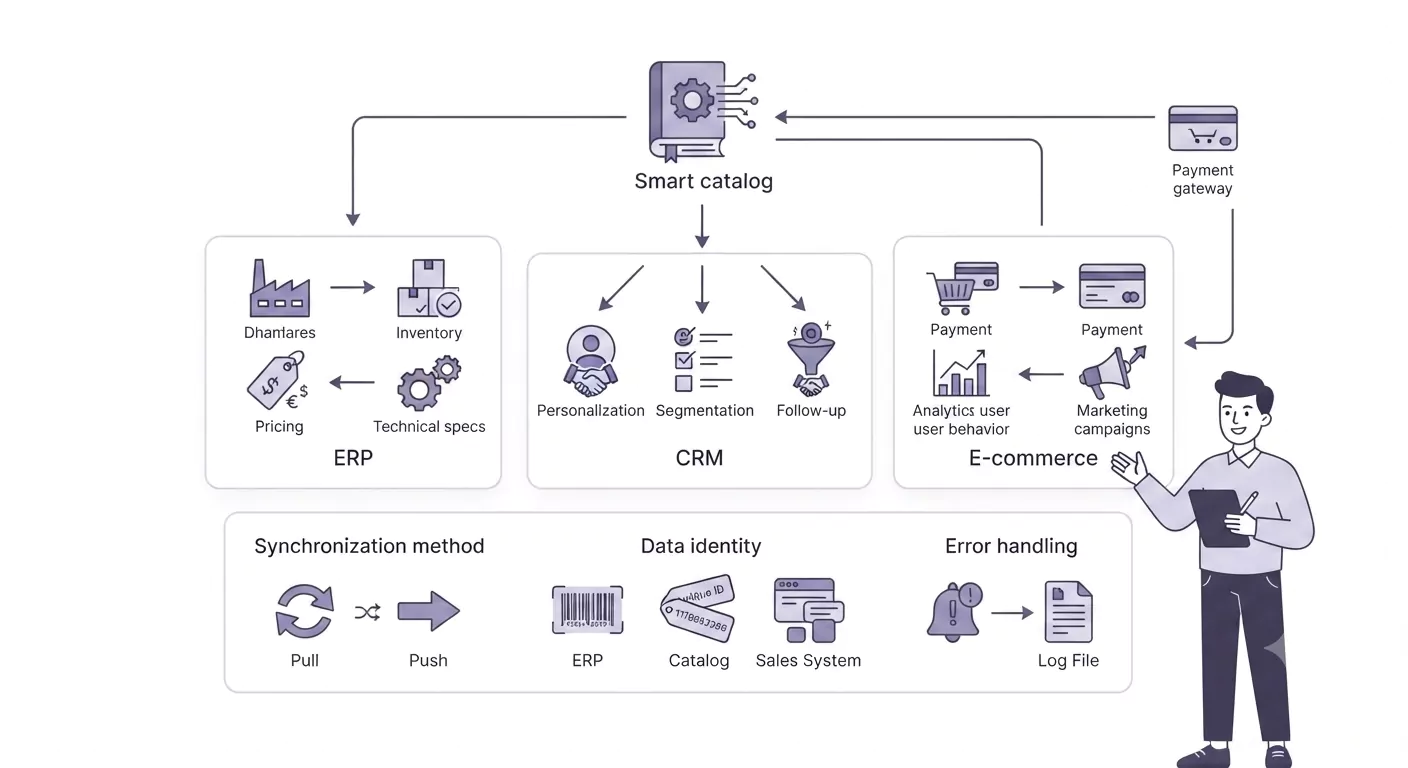
In B2B and B2C sales, the reliability of pricing and availability is paramount. By connecting to the ERP’s inventory module, every stock change is automatically reflected in the catalog.
• Content Update Automation:
When a new product is defined in the ERP or technical specs change, data flows automatically to the catalog, drastically reducing the content team's workload
• Personalized Customer Experience
Integration with CRM or authentication systems allows for Tiered Pricing or personalized catalog views based on purchase history or customer categories.
Three Key Types of Integration
Catalog APIs typically support three main connection types:
| System Type | Main Goal | Real-time Data Examples |
| ERP | Operational & Financial Accuracy | Pricing, Warehouse Stock, Technical Specs (Dimensions, Weight), Customs Info. |
| CRM | Personalization & Tracking | Access-level-based Catalog Views, Discounted Rates for Key Accounts, Quote Requests. |
| E-commerce | Centralized Sales Flow | Transferring catalog shopping carts to checkout, syncing user behavior analytics |
Techniques for Successful API Implementation
To ensure stable and efficient integration:
• Choosing a Sync Method
- Use Pull (the catalog queries the ERP periodically) for static data
- and Push (the ERP pushes data immediately after a transaction) for critical data like inventory.
• Unique ID Management
Ensure consistency in Unique Product IDs. These IDs act as the bridge between the product in the ERP, the catalog, and your sales system.
• Error Handling:
The API system must have an error logging mechanism. If a price update from the ERP fails, the technical team should be alerted immediately to prevent displaying incorrect data.
Final Words
A smart catalog connected via API to the heart of an organization (ERP and CRM) is more than a marketing tool; it is an essential element of digital infrastructure. This real-time integration boosts internal efficiency and builds customer trust by providing 100% accurate data. For organizations aiming to eliminate manual errors and accelerate sales, API connectivity should be the top priority in their smart catalog deployment.