Technical Challenges and Text Direction (RTL/LTR)
The most critical technical challenge in localization is managing languages written from Right-to-Left (RTL) or Left-to-Right (LTR).
A) Managing Text Direction (Right-to-Left / Left-to-Right)
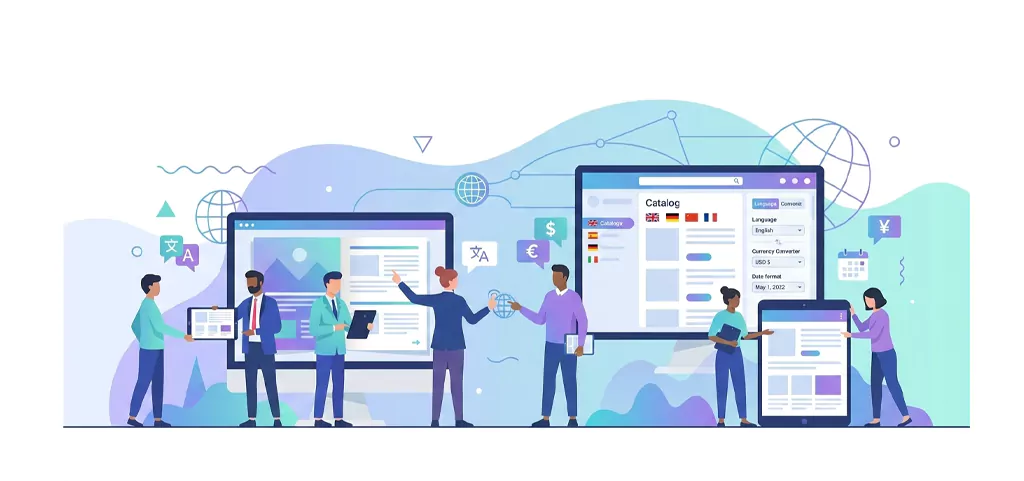
- RTL Languages: Farsi, Arabic, Kurdish, Pashto, Urdu, Balochi, and some African and Asian languages are written from right to left. The smart catalog must have the capability to adjust not only the text but also the entire page Layout, including images and tables, from right to left for these languages.
- LTR Languages: English, German, Spanish, Turkish, etc., are written from left to right.
- Key Point: The platform must provide flawless and rapid switching between these two directions to maintain the User Experience (UX).
B) Numerical and Format Localization
Translating the text is insufficient; all numerical elements must be localized:
- Currency: Automatic change of currency unit (e.g., from Dollar to Euro or Rial) based on the visitor's geographical location.s
- Date and Time: تغییر فرمت تاریخ (مثلاً YYYY/MM/DD به DD/MM/YYYY) بر اساس استاندارد محلی
Content Strategy: Translation, Adaptation, and Culturalization
Localization goes beyond translating words; it means adapting the message to the local culture.
A) Maintaining Brand Consistency in Translation
The mere use of machine translators is insufficient. Catalog content translation must be performed by Native Speakers and specialists to accurately convey the Brand Voice and technical terminology.
- Brand Glossary: Preparing a dedicated glossary for the company's technical and marketing terms in each language to prevent mistranslations.
B) Localizing Images and Examples
Images, videos, and Case Studies must align with the local culture and market.
- Example: In a catalog for the Middle Eastern market, images should display product models in local settings and with appropriate human models, which creates a stronger sense of connection.
Efficient Management of Multilingual Versions
The smart catalog must provide management solutions for handling a large number of different language versions.
A) Centralized Content Management
The platform must allow management and updating of all language versions from a Central Panel.
- Advantage: If a change is made to a product's technical specifications, the manager can apply the change in the central panel and then automatically send it to local translators for updates in other versions.
B) Smart Linking System
The main catalog link should intelligently display the appropriate language version based on the user's Geo-Location or browser settings.
- Scenario: If a user from Germany opens the catalog, they should be automatically redirected to the German version. However, a simple button for manual switching between languages must be available.
C) International SEO
For each language version, Meta Tags and Hreflang tags must be correctly configured. These tags tell search engines (like Google) that this version of the content is the equivalent of another version in a different language, which prevents penalties for Duplicate Content and boosts local ranking.
Final Words
کاتالوگهای چندزبانه، پتانسیل کسبوکار شما را برای ورود به بازارهای جهانی افزایش میدهند. با انتخاب یک پلتفرم هوشمند که توانایی مدیریت جهت متن (RTL/LTR)، بومیسازی عددی و امکان مدیریت مرکزی را فراهم میکند، میتوانید از پیچیدگیهای فنی رها شده و بر استراتژی محتوایی تمرکز کنید. در نهایت، بومیسازی موفق نه تنها به معنای ترجمه، بلکه به معنای ایجاد یک تجربه کاملاً فرهنگی و قابل اعتماد برای هر مخاطب در سراسر جهان است.