Technical SEO
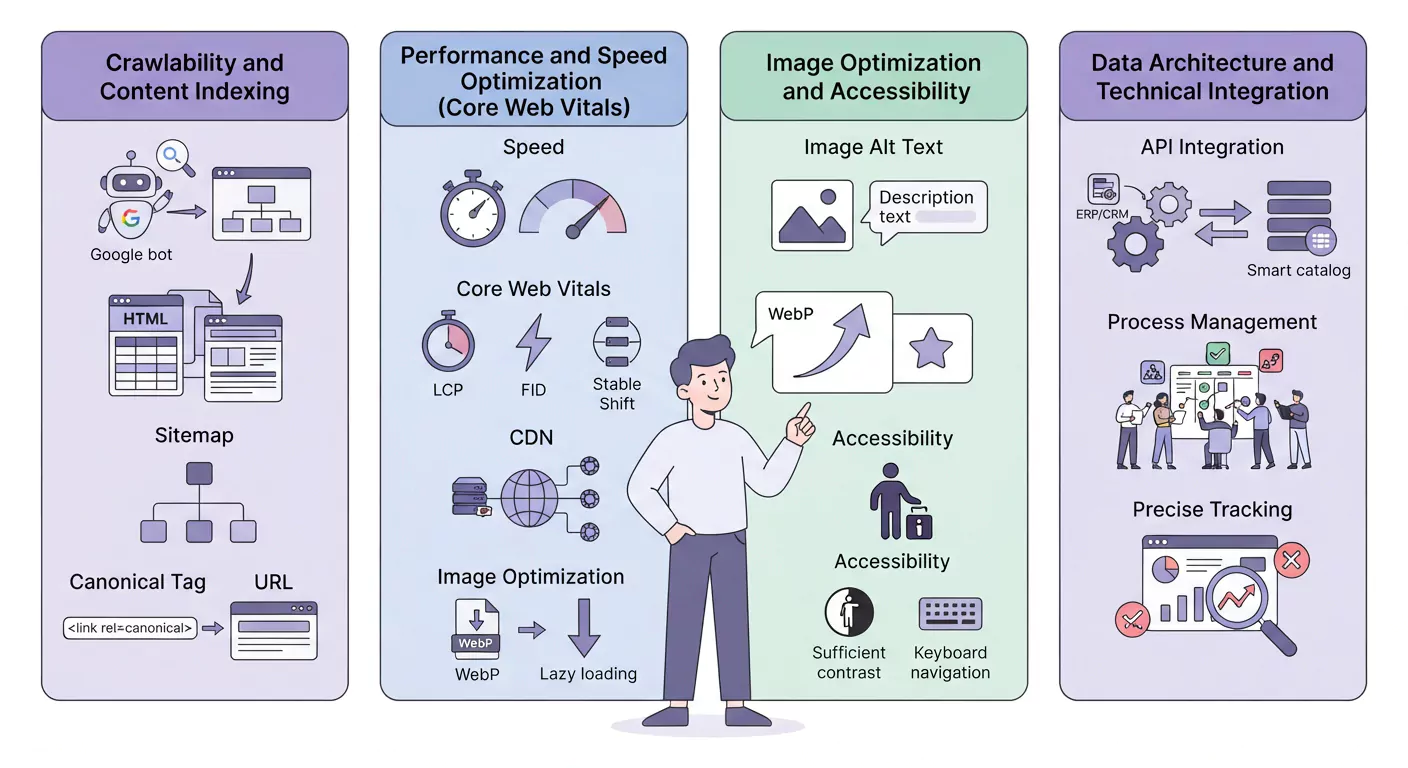
These actions relate to how search engines crawl and understand the catalog's code.
- Full Content Indexing Ensure that the catalog's text content (not just images) is rendered in HTML and is readable by search engine bots
- Hreflang Tags: If the catalog is multilingual, set the hreflang tags for each version so Google understands the target language and region, preventing duplicate content penalties.
- Core Web Vitals Optimization: Ensure speed metrics (LCP, FID, CLS) are excellent. Use techniques like WebP compression and Lazy Loading
- Dedicated Sitemap: The Lenoos digital publishing platform should provide a separate sitemap for all catalog pages to search engines.
- Canonical Tags: If catalog content is used elsewhere on your site, use canonical tags to point to the primary source to avoid Google’s confusion.
- Full Responsiveness: Ensure the catalog is perfectly optimized for mobile, as Google uses Mobile-First Indexing.
On-Page SEO
These actions relate to the specific content you place within the catalog.
- Deep Keyword Research: Use primary keywords (e.g., "Buy Industrial Air Compressor") in titles and the body text of the catalog.
- Title Tag & Meta Description Optimization: Write a compelling and SEO-friendly title and description for the catalog’s landing page.
- Logical Heading Tags: Define page titles and main sections with H1 and H2 tags hierarchically to clarify content structure for Google.
- Alt Text for Key Images: For images showing your main products, write Alt Text containing relevant keywords.
- Smart Internal Linking Link to important landing pages or product pages on your website from the catalog text to pass on SEO authority.
- Sufficient Text Content: Don’t just post images; write rich, keyword-heavy descriptions for every product.
- Internal Page URL Optimization: If each catalog page has a unique URL, ensure they are short and contain keywords.
Read More
کاتالوگ دیجیتال و سئو: چگونه نشریه الکترونیک در صدر نتایج جستجوی گوگل قرار میگیرد؟
Smart Catalog Speed Optimization Techniques: WebP, Lazy Loading, and Core Web Vitals
Multilingual Catalog Management: RTL/LTR Standard and Content Localization
Cultivating Smart Catalog Adoption: Smoothly Transitioning Customers from PDF to Digital Link
Engagement & Behavioral SEO
These actions relate to how users interact with the catalog, which directly impacts Google rankings.
- Bounce Rate Reduction: Use engaging content, videos, and interactive tools to encourage users to flip through more than one page.
- Increase Dwell Time: Use deep, relevant content to increase the average time a user spends in the catalog (high dwell time is a positive signal for Google).
- Minimize Navigation Friction: Ensure moving between pages is easy and links are functional to prevent user frustration.
- Schema Markup: Use schema codes (like Product Schema or FAQ Schema) for products and customer reviews within the catalog to help Google understand your content type.
- Excellent User Experience (UX): The catalog must be enjoyable and easy to use. A strong UX directly improves behavioral signals.
Off-Page SEO
These actions relate to the distribution and promotion of the catalog across the web.
- High-Quality Backlinking: Publish the catalog link on reputable and relevant sources (industry blogs or news platforms) to increase Domain Authority.
- Social Media Promotion Actively share the catalog link on social media to generate direct traffic and social signals.
- Create Dedicated Landing Pages: Build a landing page with persuasive content to introduce the catalog and share its link.
- Newsletter Distribution: Regularly send the catalog link to newsletter subscribers (Email Marketing) to drive direct traffic.
- QR Code Utilization: For offline customers, place the catalog’s QR code on printed materials to facilitate link access
- Open Graph Optimization: Configure the catalog so that the cover image, title, and description display correctly when shared on social media.
- Monitor Google Search Console: Check Search Console reports monthly to ensure there are no errors in crawling, indexing, or mobile responsiveness.
Read More
Convert a Heavy PDF File into a Smart Catalog in 5 Steps (Operational Tutorial)
Smart Catalog in Regulated Industries: Compliance and Audit Trail
Advanced Retargeting with Smart Catalog: Behavioral Data for Ad Personalization
Comprehensive Guide to Smart Digital Catalogs and Content Marketing in 2026
Final Words
SEO for a smart catalog is an ongoing process and should not be abandoned after publication. By meticulously executing these 25 actions in technical, on-page, and behavioral SEO, you can ensure that your Lenoos smart catalog becomes a powerful asset for attracting organic traffic. An SEO-optimized catalog does not just increase sales; it becomes one of the most important organic traffic-driving pages on your website.