Challenges of Distributed Teams in Catalog Management
The geographical and specialized fragmentation of teams necessitates a centralized platform.
A) Confusion in Versions (Version Control)
The sales team needs the final price catalog, while the marketing team is working on the next version. Without a robust version control system, the risk of publishing incorrect information increases.
B) Content Approval Bottleneck
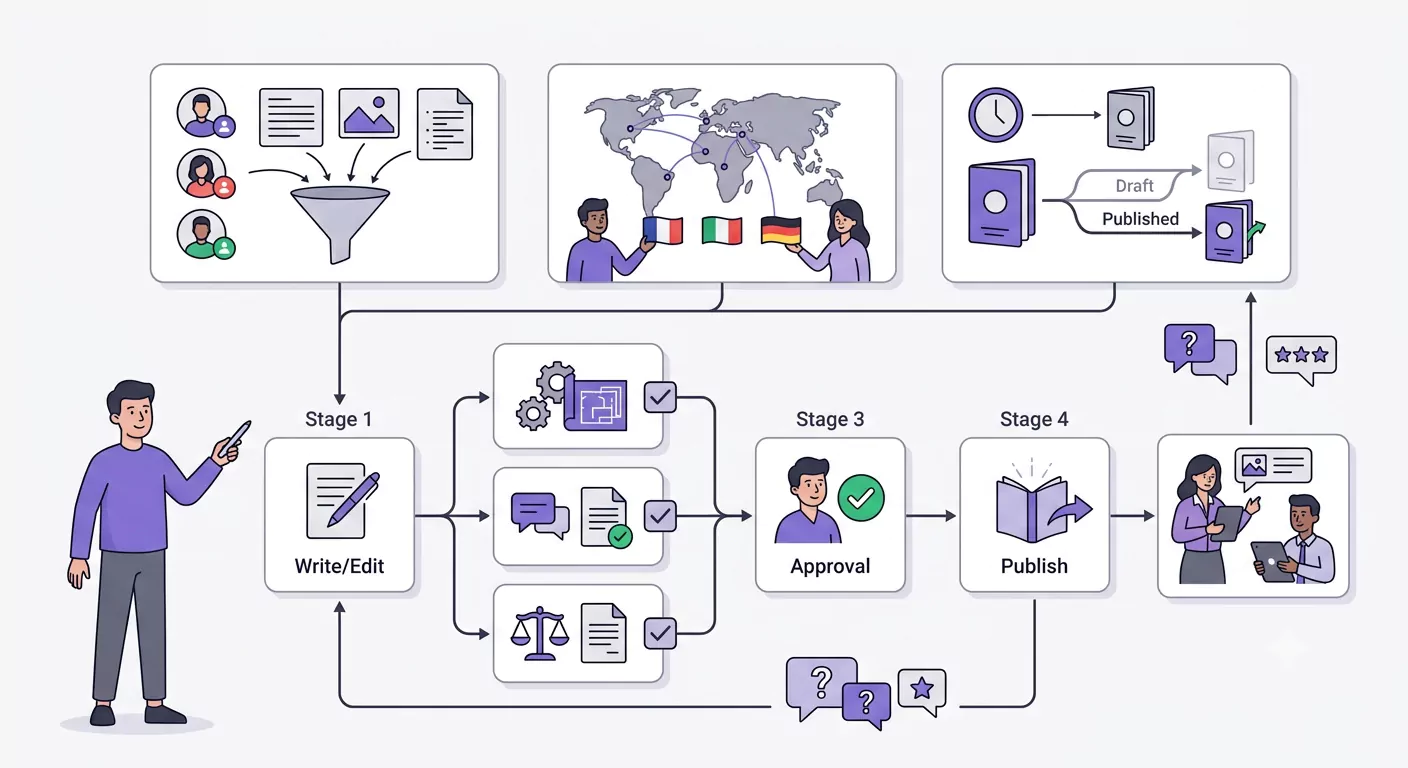
Images are entered by the graphics team, text by the marketing team, and technical specifications by the engineering team. Without an automated approval process, publishing a new product may take weeks.
C) Risk of Inappropriate Access
Sales representatives must have access to their own prices (Personalized Pricing), but they must not be able to alter public prices or tamper with technical content.
Core Capabilities in Smart Catalog Workflow Management
The digital publishing platform must act as a process engine (Process Engine).
A) Roles and Group Permissions System (Roles & Permissions)
The system administrator must be able to define the following roles:
- Contributor: Can only create a new product or edit product text.
- Reviewer: Can only approve or reject the entered content (without the possibility of editing).
- Publisher: The only individual who has the right to publicly publish the catalog.
- Team-Specific Access: Restricting editing access solely to specific products or categories (for example, the technical team only possesses access to edit "technical specifications").
B) Multi-Stage Approval Process
The system must provide the possibility to define an approval chain:
- 1. Content Entry: The writers' team enters the initial text.
- 2. Technical Approval: The engineering team approves the specifications.
- 3. Legal Approval: The legal department approves the disclaimer text (Disclaimer).
- 4. Final Approval: The marketing manager grants permission to publish.
C) Multilingual Content Management
For internationally distributed teams, the process must also support content translation. A change in the English text must notify the German translation team of the need to re-translate that specific section
Read More
Smart Catalog in Regulated Industries: Compliance and Audit Trail
Smart Catalog and Sales Enablement: A Tool for Training Representatives and Partners
Smart Catalog in the B2B Market: Lead Generation at Trade Shows and Personalized Presentations
Smart Catalog Integration via API: Connecting to ERP, CRM, and E-commerce Systems
Seasonal Content Management: Update Strategies for Catalog Promotions
Practical Functionality for Sales Representatives and Business Partners
Workflow management must also improve the user experience of sales representatives (Sales Reps).
A) Displaying Draft Versions
Internal teams must be able to view different versions of the catalog (for example, "Winter 2026 Catalog – Under Approval"), without this version being published for general customers.
B) Centralized Feedback System
Workflow management must also improve the user experience of sales representatives (Sales Reps).
Final Words
Effective catalog management in a large enterprise structure requires a smart platform that focuses on the "process", not just the "content." By precisely defining roles, executing a multi-stage approval process, and accurately managing versions, the smart catalog acts as the backbone of Product Information Management (PIM) and guarantees that all members of the organization, whether in Tehran or Frankfurt, operate based on a single, precise, and approved source.