High-Quality Lead Generation in B2B
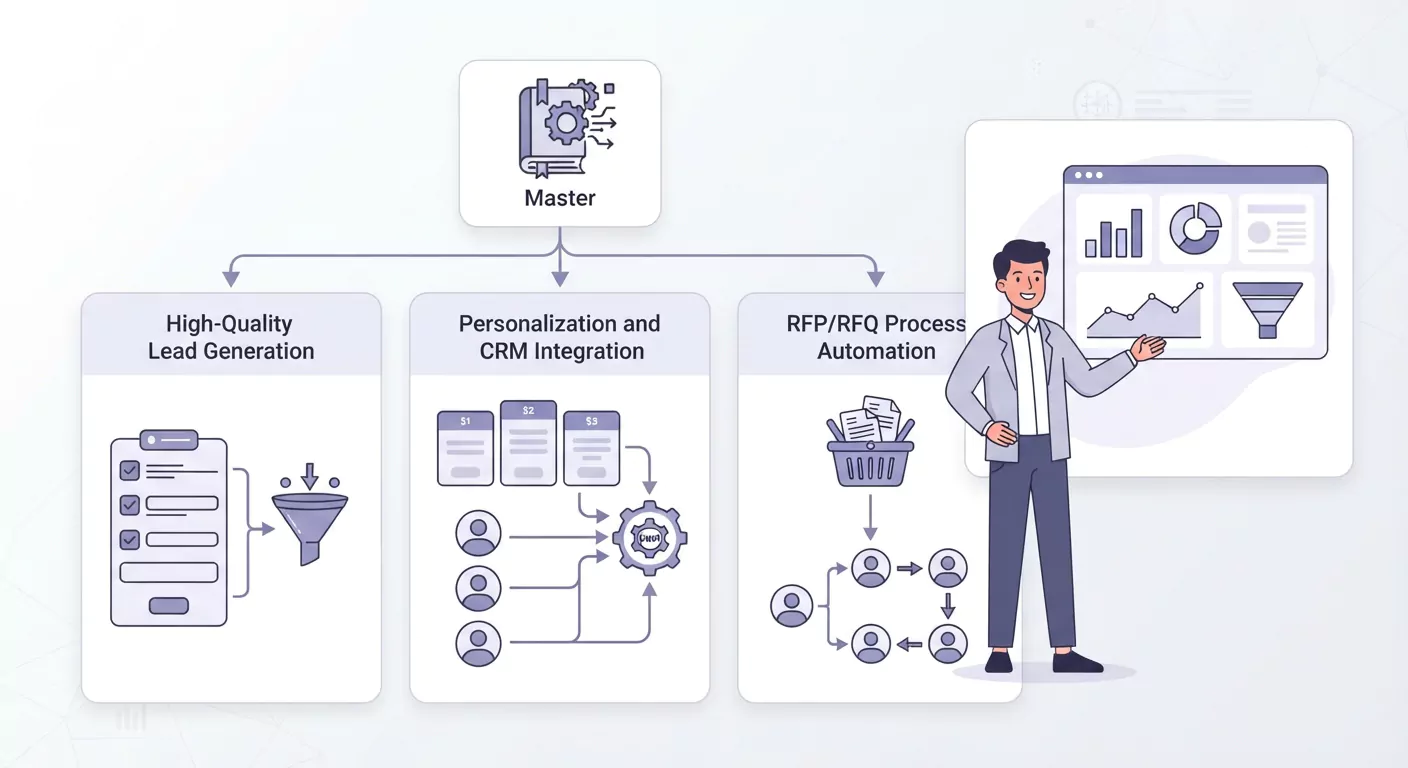
In B2B, the primary focus is on lead quality rather than mere volume.
1.1. Attracting Leads Through In-Depth Technical Content
Technique: In B2B, decision-makers require technical specifications, industry standards, and performance charts. Smart catalogs deliver this content in an indexable, searchable format.
Lead Capture Systems with Custom Forms
Technique: Utilize multi-step forms for pre-qualifying leads. Instead of a generic "Request a Call," use "Request a Quote for 500 Units" to determine lead intent and quality immediately.
Tracking Lead Sources for Channel ROI
Technique: Precise deployment of UTM links and catalog analytics to determine which campaign or representative generated higher-quality leads that ultimately converted into sales.
Personalization and Customer Relationship Management (CRM Integration)
Personalization in B2B means respecting the customer's specific commercial agreements.
Offering Tiered and Custom Pricing
Technique: By connecting the catalog to an ERP or CRM system, once a B2B client logs in, their contract pricing, volume discounts, or dedicated inventory levels are displayed automatically.
Automated CRM Integration
Technique: Ensure all user interactions (browsing, video plays, spec sheet downloads) stream directly into their CRM profile, enabling sales teams to execute targeted follow-ups.
Empowering Sales Teams for One-on-One Engagement
Technique: Sales representatives can send personalized versions of catalog pages (e.g., omitting public list prices) to specific clients to guide discussions more professionally.
Read More
Content Gating in the Smart Catalog: B2B Lead Generation and Restricting Sensitive Information
Sending Smart Catalogs on WhatsApp and Messengers: A Guide to Optimal Distribution
Affiliate Marketing with Smart Catalogs: Tracking Sales Representative Performance
Hyper-Personalization in the Smart Catalog: The Future of Interactive Content and Sales
RFP and RFQ Process Automation
Reducing turnaround time for official proposals.
RFQ/RFP Automation Module
Technique: Enable users to add multiple products to an inquiry basket, specify necessary details (e.g., order volume, delivery date), and submit the request directly to the sales or procurement team.
Generating Official Sales Documents
Technique: Automatically generate a professional PDF document (acting as a formal price quote or selected catalog excerpt) based on the customer's selections within the catalog.
Workflow Management for Internal Approval
Technique: Every pricing request submitted through the catalog routes through an internal approval workflow to ensure final figures are validated by the financial manager.
Content and Data Management for Enterprise Sales Teams
Supporting distributed sales representatives.
Role-Based Access Management
Technique: Define precise access permissions for each sales representative, regional manager, or channel partner so they only access the content, pricing, and tools required for their specific role.
Real-time Data for Operational Accuracy
Technique: By linking APIs to the ERP, sales representatives can inform clients of live warehouse inventory and up-to-date pricing in real time, preventing errors caused by outdated data.
B2B Customer Behavior Analysis
Technique: Apply User Journey Mapping to understand the sequence in which decision-makers at client companies review the catalog and identify which sections (e.g., certifications) command the most attention.
Read More
Convert a Heavy PDF File into a Smart Catalog in 5 Steps (Operational Tutorial)
Automating Price Inquiry (RFQ) Response with Smart Catalogs in B2B Sales
Catalog Workflow Management for Distributed and Enterprise Teams
Smart Catalog Integration via API: Connecting to ERP, CRM, and E-commerce Systems
User Journey Analysis in Catalogs: Identifying Customer Drop-off Points
Final Words
In the B2B space, a smart catalog is no longer a marketing brochure; it is a strategic Product Information Management (PIM) tool for sales process automation and workforce empowerment. By prioritizing custom pricing, complete CRM/ERP integration, and automated RFP response workflows, B2B organizations can shorten their sales cycles, increase operational precision, and deliver a high-level information experience to their business partners. This transformation turns the catalog into a core profitability hub.