Crawlability and Content Indexing
The first step in SEO is ensuring that Google can “see” your content.
Ensuring Full Indexing
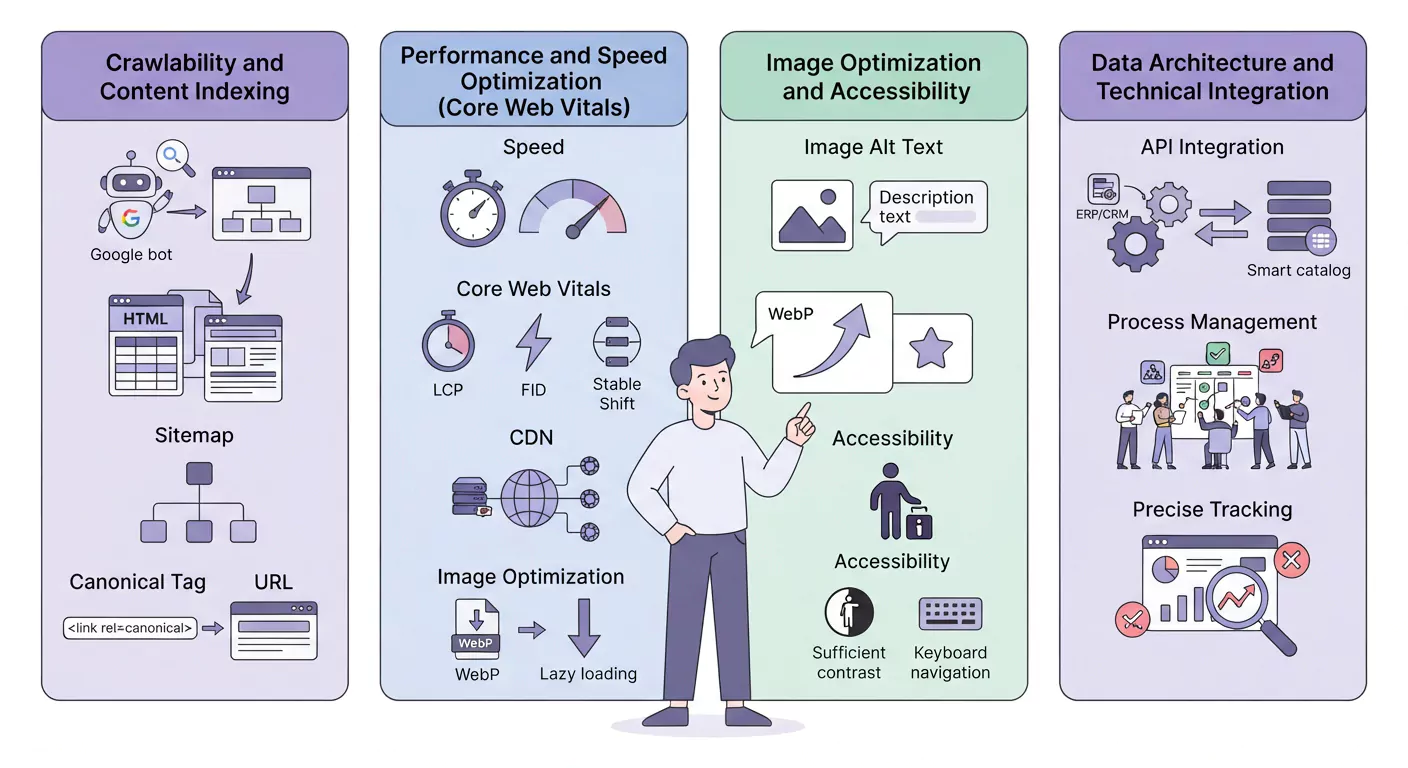
Technique: Make sure your smart catalog platform renders all textual content, product data, and technical tables as live HTML, rather than displaying them as images or blocked JavaScript content.
Correct Use of Canonical Tags and Sitemap
Technique: The rel=canonical tag should always point to the main catalog URL. Additionally, a clean and up-to-date Sitemap is essential to guide Google bots to new pages.
SEO-Friendly URL Structure
Technique: URLs should be short, readable, and include the primary product or category keyword (e.g., yourcatalog.com/product/dasht-meshin-model-x).
Performance and Speed Optimization (Core Web Vitals)
Speed is a critical ranking factor for Google in user experience.
Focusing on LCP and FID (Core Web Vitals)
Technique: LCP (Largest Contentful Paint), which measures the loading time of the largest element in the catalog (usually the main product image), must be optimized.
The Critical Role of CDN and Local Optimization
Technique: Use a CDN (Content Delivery Network) to reduce latency and deliver content faster to users.
Image Format Optimization and Lazy Loading
Technique: Use modern formats such as WebP and enable Lazy Loading for images in the lower sections of the page to maximize initial loading speed.
Read More
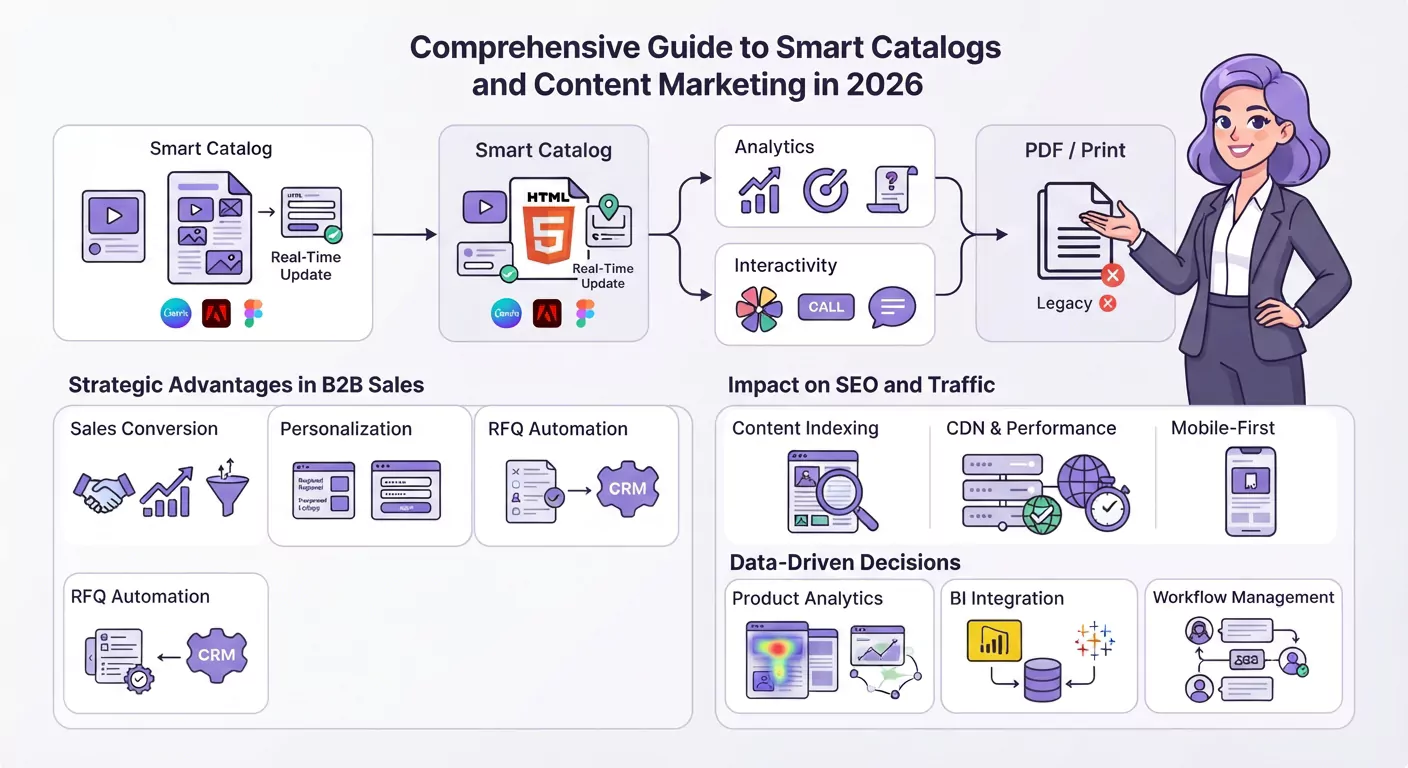
Comprehensive Guide to Smart Digital Catalogs and Content Marketing in 2026
15 Advanced CRO Techniques to Boost Sales Conversion Rate from Smart Catalogs
The Final Digital Catalog SEO Checklist: 25 Steps to Google Rank #1
Smart Catalog Speed Optimization Techniques: WebP, Lazy Loading, and Core Web Vitals
The Importance of CDN in Digital Catalogs: How to Optimize Loading Speed by 100%?
Image Optimization and Accessibility
These two technical factors have a direct impact on UX and SEO.
Complete Image SEO
Technique: Every product image must have accurate and descriptive Alt Text that includes the target keyword of the page. This is critical for visually impaired users and search engines.
Accessibility Principles (WCAG Compliance)
Technique: Adhere to global standards (WCAG), including sufficient contrast, keyboard navigability, and correct use of ARIA tags for interactive elements. Google rewards sites that are optimized for accessibility.
Data Architecture and Technical Integration
Data stability and infrastructure form the backbone of long-term catalog performance.
API Integration for Real-Time Data
Use APIs for automatic and real-time synchronization of data (prices, inventory, technical specifications) from ERP/CRM systems to the catalog. This accuracy builds user trust.
Process Management in Large Organizations
Technique: Clearly define roles, access levels, and approval workflows for content management in large teams to prevent human error in entering technical data.
Precise Tracking and Technical Troubleshooting
Technique: Use analytical tools to identify and fix technical issues such as broken links, server errors, and pages with high bounce rates.
Read More
WCAG and Smart Catalog Accessibility: Designing for People with Disabilities
Smart Catalog Integration via API: Connecting to ERP, CRM, and E-commerce Systems
User Journey Analysis in Catalogs: Identifying Customer Drop-off Points
User Journey Analysis in Catalogs: Identifying Customer Drop-off Points
Final Words
The technical SEO of a smart catalog is an invisible investment that generates long-term returns. By focusing on speed (Core Web Vitals), infrastructure stability (CDN and API), and accessibility principles, you ensure that your catalog is optimized not only for human eyes but also for Google’s intelligent bots. Leading catalog platforms guarantee this infrastructure, allowing you to focus on creating valuable content and increasing conversion rates.