What is a Smart Catalog? (Definition and Fundamental Concepts)
A smart catalog is an HTML5 document or web application that dynamically and interactively displays content instead of storing it statically.
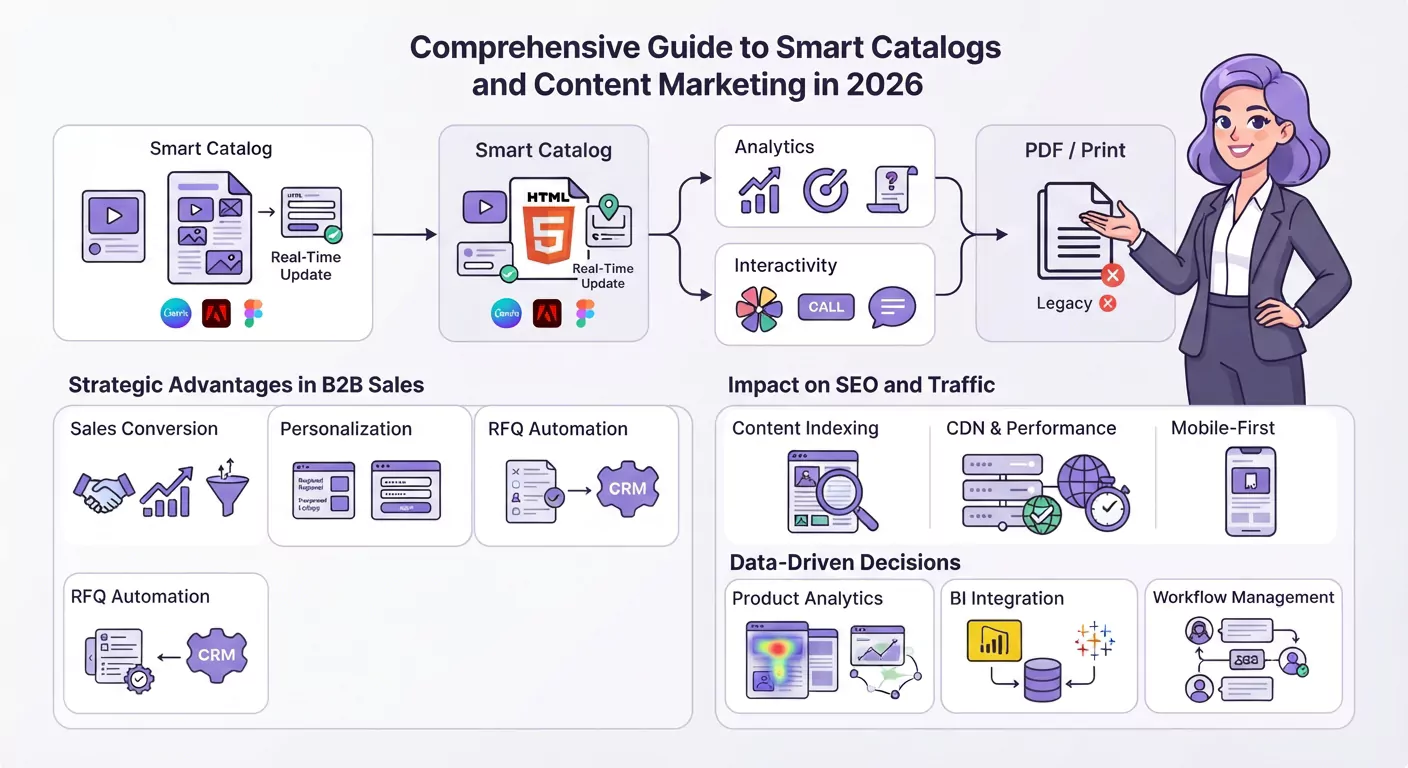
Key Differences with PDF or Printed Catalogs
| Feature | Smart Catalog (E-Publication) | PDF / Printed |
| Measurability | Complete (Analytics, tracking clicks and page flips) {1} {2} | Zero |
| Content Updates | Real-time and automated {3} {4} | Manual and requires re-publishing |
| Interactivity | Embedding video, lead forms, personalization {4} {5} | Static, text/images only |
| SEO | Full indexability on Google {6} | Extremely limited |
1) Leveraging Catalog Data to Predict Market Trends and Develop New Products
2) Smart Catalog Behavioral Data Analysis: How to Track True Customer Interest?
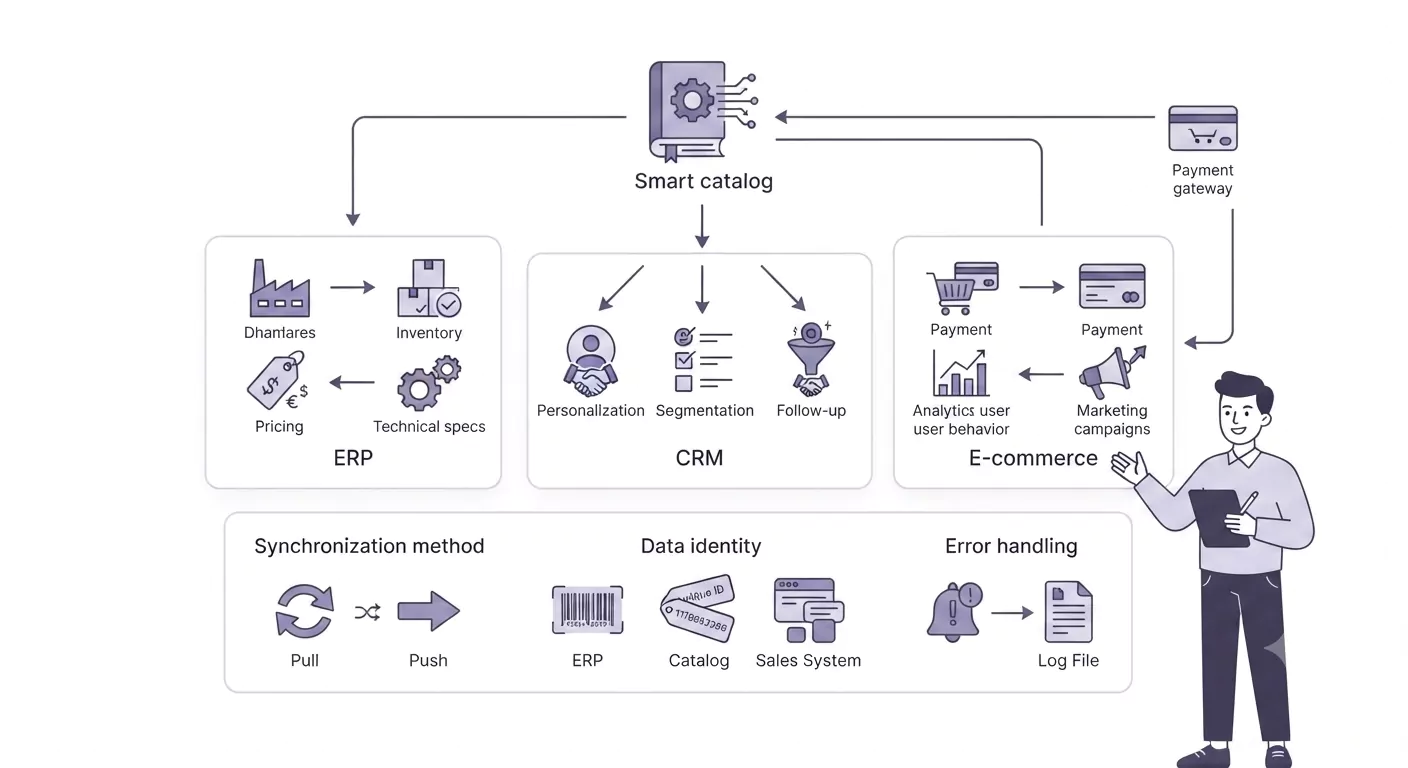
3) Smart Catalog Integration via API: Connecting to ERP, CRM, and E-commerce Systems
4) Hyper-Personalization in the Smart Catalog: The Future of Interactive Content and Sales
5) Video Content Strategy in Catalogs: Utilizing Video for Product Pages with Low Conversion Rates
۶) The Final Digital Catalog SEO Checklist: 25 Steps to Google Rank #1
The Beating Heart: Interactivity (Engagement)
A smart catalog is a tool that compels user interaction. This is made possible by placing active elements such as Call-to-Action (CTA) buttons, lead forms, and video demos alongside the product. {7}
7) Content Gating in the Smart Catalog: B2B Lead Generation and Restricting Sensitive Information
Strategic Advantages of Smart Catalogs in B2B Strategy
In corporate transactions, this tool provides unique advantages.
Increasing Conversion Rates and Streamlining the Sales Processs
By delivering structured and precise content, a smart catalog prevents customer confusion. This is particularly useful in complex RFP/RFQ (Request for Proposal/Quote) processes, automating response turnaround time. {8}
8) Automating Price Inquiry (RFQ) Response with Smart Catalogs in B2B Sales
Scalable Personalization
The ability to display different catalog versions or customized pricing based on customer identity (post-login) is vital in B2B deals. This saves sales teams time and builds customer trust. {9} {10}
9) Hyper-Personalization in the Smart Catalog: The Future of Interactive Content and Sales
10) ERP-Catalog Synchronization
Customer Inquiry Response Automation (RFQ/RFP)
Connecting the catalog to a CRM system instantly registers price inquiry requests and initiates the response workflow. {11}
11) B2B Lead Generation with Catalog
The Role of Smart Catalogs in SEO and Driving Site Traffic
A smart catalog can become a powerful hub for acquiring organic traffic.
Content Indexing by Google
Unlike PDFs, search engines can crawl and index all text, image alt text, and technical data inside a smart catalog. {12}
Technical Infrastructure for Speed and Stability
SEO and user experience are heavily dependent on speed. Using CDN infrastructure and optimizing image formats (WebP) to reduce Largest Contentful Paint (LCP) is guaranteed by smart platforms. {13} {14}
14) Product Photography Checklist
Responsive Design and Accessibility
A mobile-first optimized catalog that adheres to Web Content Accessibility Guidelines (WCAG) for users with disabilities not only improves UX but also boosts site SEO in the eyes of Google. {15} {16}
15) Catalog Speed Optimization
16) wcag and smart catalog accessibility
Data-Driven Decisions
A smart catalog serves as a behavioral data collection tool for product and marketing teams.
Browsing Behavior Analysis (Product Analytics)
Measuring page dwell time, page flip rates, and clicks on specific features helps product teams uncover hidden market trends and unmet customer needs. {17}
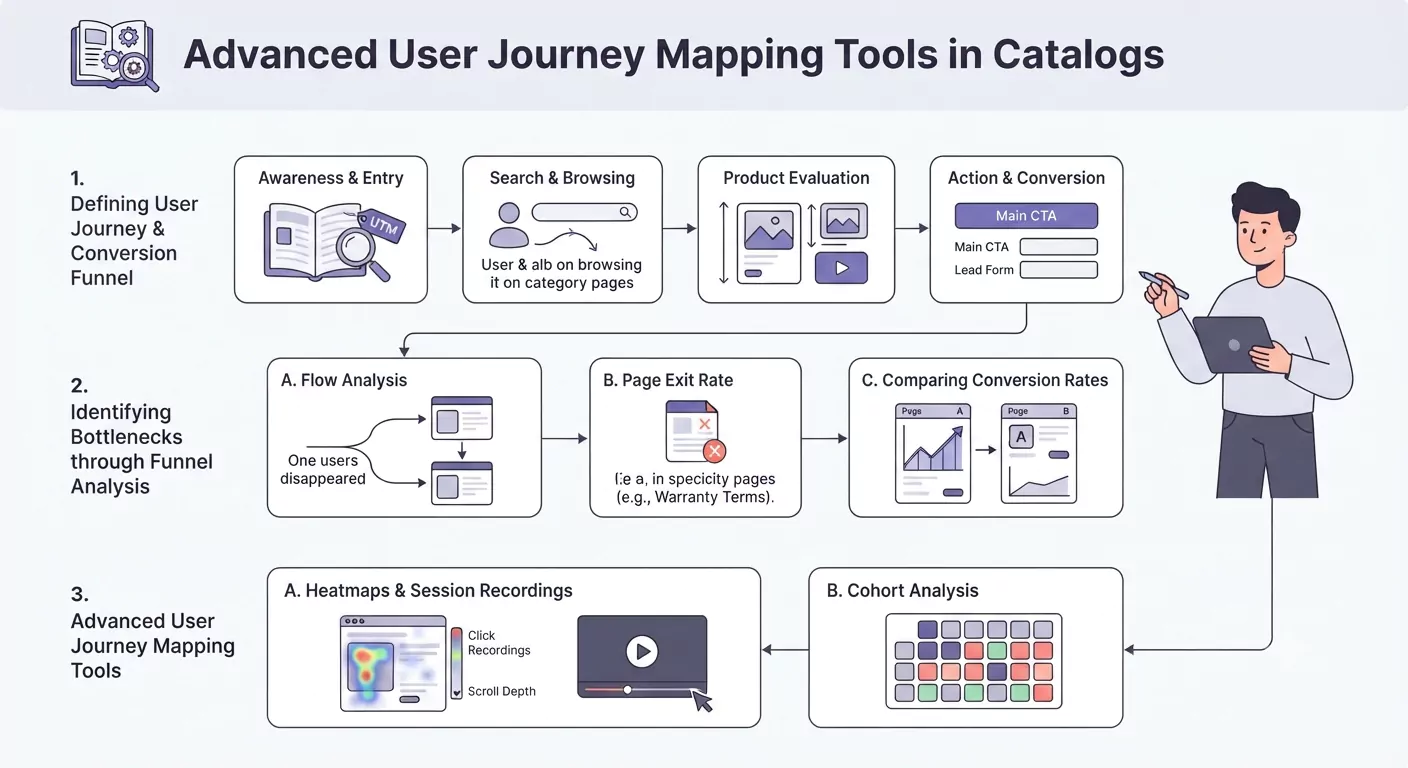
User Journey Mapping and Identifying Bottlenecks
Through User Journey Mapping, team members can identify pages with the highest customer drop-offs and optimize their layouts or content to boost conversion. {۱۸}
18) Conversion funnel in smart catalogs
Integration with Business Intelligence (BI) Systems
For executive-level reporting, catalog data must connect to tools such as Power BI to measure content ROI and its direct impact on final sales. {19}
19)) Sales Analysis via Business Intelligence
Operational and Process Management in Large Enterprises
Integrations and management workflows are essential for catalog success in enterprise organizations.
Content Management Workflow and Version Control
In distributed organizations, user access roles (Contributor, Reviewer, Publisher) and multi-step approval workflows must be defined to prevent the publication of inaccurate content. {20}
20) smart catalog for sales representatives
Cyclical and Seasonal Content Updates
The capability to clone catalogs and schedule publication windows for temporary sales campaigns—without impacting the master version—presents a major operational advantage. {۲۱}
21) Smart Catalog seasonal content management
Affiliate Marketing and Sales Rep Tracking
Using customized UTM links enables precise attribution of leads and final sales to each sales representative or affiliate marketer. {22}
22) smart catalog Conversion tracking
Final Words
A smart catalog is not a file, but a living, multi-purpose customer touchpoint. Content marketing success in 2026 begins with accepting the truth that your catalog must be measurable, dynamic, and fully integrated with your organization's other data systems. By implementing the principles outlined in this comprehensive guide, your business can leverage an unmatched competitive edge in acquiring traffic, generating leads, and ultimately scaling sales.