Diagnosing Critical Products Through Data
The first step is utilizing catalog datato identify the problem
Diagnosing Critical Products Through Data
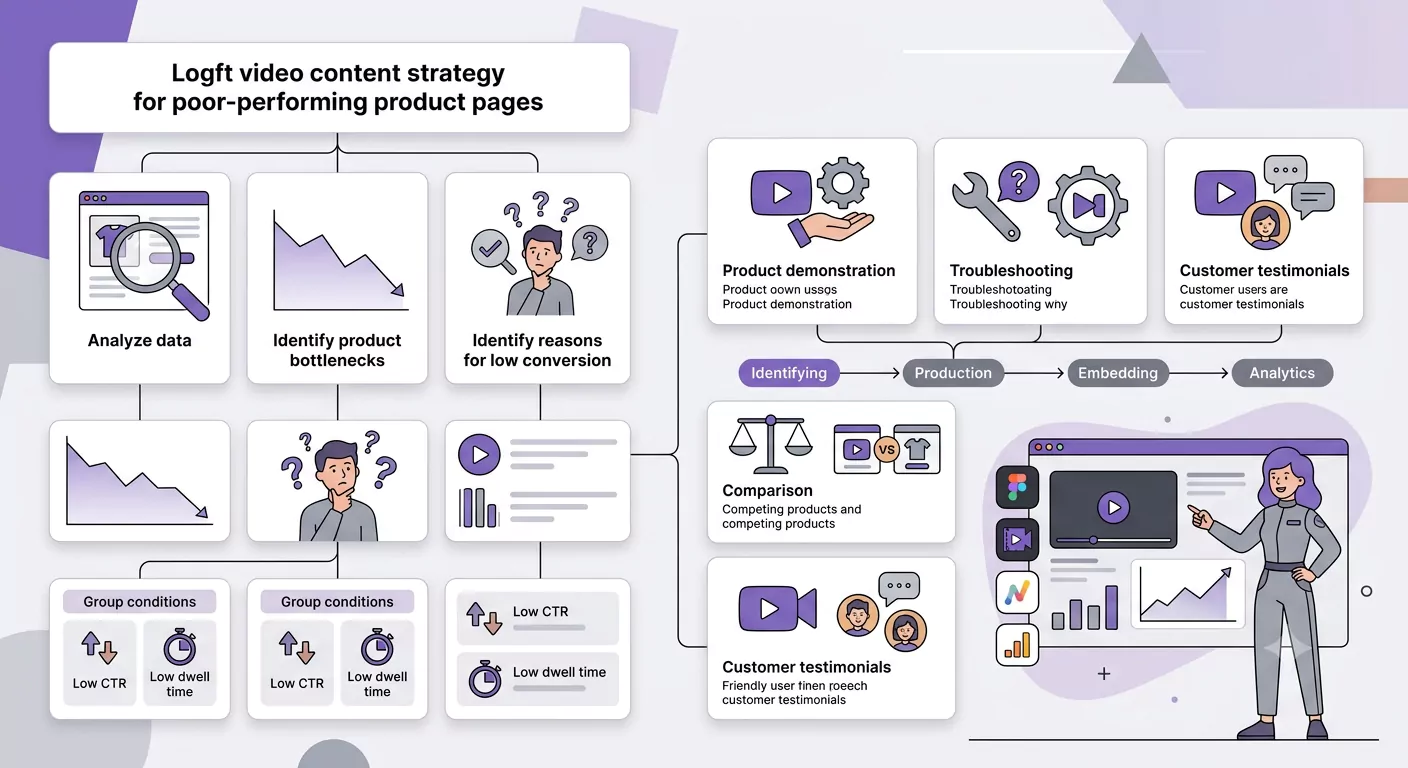
Products that possess high page views (Page Views) but low dwell time (Dwell Time) and low click-through rate (CTR) on the CTA are the primary candidates for improvement with video.
- Assumption: The customer is interested (high views), but does not possess sufficient understanding or trust to take action (low dwell time and CTR).
B) The Reason for Customer Confusion
For B2B products, technical complexities can be a deterrent factor. For B2C products, the failure to display the feeling and mood of using the product (Lifestyle) can be problematic.
Targeted Video Content Production Strategy
The video content strategy for a digital catalog can be based on the principle that product videos should not be promotional in nature, but rather problem-solving.
Read More
Leveraging Catalog Data to Predict Market Trends and Develop New Products
Leveraging UGC in Smart Catalogs: Boosting Brand Trust and Conversion Rates
Smart Catalog Speed Optimization Techniques: WebP, Lazy Loading, and Core Web Vitals
Smart Catalog Interactive Tools: How to Increase Engagement and Conversion Rate?
Comprehensive Guide to Smart Digital Catalogs and Content Marketing in 2026
| Video Type | Strategic Goal | Best Embedding Location in the Catalog |
|---|---|---|
|
Demonstration Video |
Displaying the method of installation, use, and operation of complex features. | Alongside technical details and product specifications |
|
Troubleshooting Video |
Answering the most common questions that the support team is asked regarding the product. | At the bottom section of the page, as "Frequently Asked Questions (FAQs). |
|
Comparison Video Comparison |
Displaying the superiority of this product compared to the old model or competitors (objectively and empirically). | On comparison pages or pop-ups. |
|
Customer Testimonial Video Testimonial |
Displaying the experience of real customers who have been satisfied with this product (UGC). | Alongside call-to-action (CTA) buttons to establish trust. |
The One-Minute Principle
Videos must be short and precise. For products with low conversion rates, the goal of the video must only be convincing the audience to perform the "next action" (clicking on the CTA), not comprehensive product training.
Technical Implementation and Performance Analysis
Another key aspect of defining a video content strategy for a digital catalog is that how the video is embedded and how its effectiveness is analyzed within the smart catalog are crucial.
Direct Embedding
Utilize the capability of direct video embedding (instead of linking to YouTube or Aparat) in the smart catalog platform. This action improves the user experience, prevents the user from exiting the catalog, and controls the video loading speed.
Video Event Tracking
The catalog platform must be able to track the following events:
- What percentage of users played the video?
- What percentage of users watched the video to the end?
- Did the user click on the CTA after watching the video? (Correlation Analysis)
- Insight: If the click-through rate on the CTA increased by 20% after watching the video completely, your video content strategy has been successful.
Loading Optimization (Lazy Loading)
Ensure that video files are not loaded until the user reaches the intended page, in order to maintain the overall speed of the catalog for the rest of the pages.
Final Words
Video is the most effective language in digital marketing, but its power lies in target-orientedness. By utilizing the analytical data of the smart catalog to precisely identify products with low conversion rates, you can employ video content as a strategic "antidote." By focusing on resolving ambiguities, increasing trust (through UGC), and improving technical transparency, you can elevate the sales conversion rate of your products simply and in a data-driven manner.