1. Challenges and Techniques in Multimedia Content Management
Visual content is the primary factor behind catalog file weight and slow loading times.
1.1. High-Scale Image Optimization
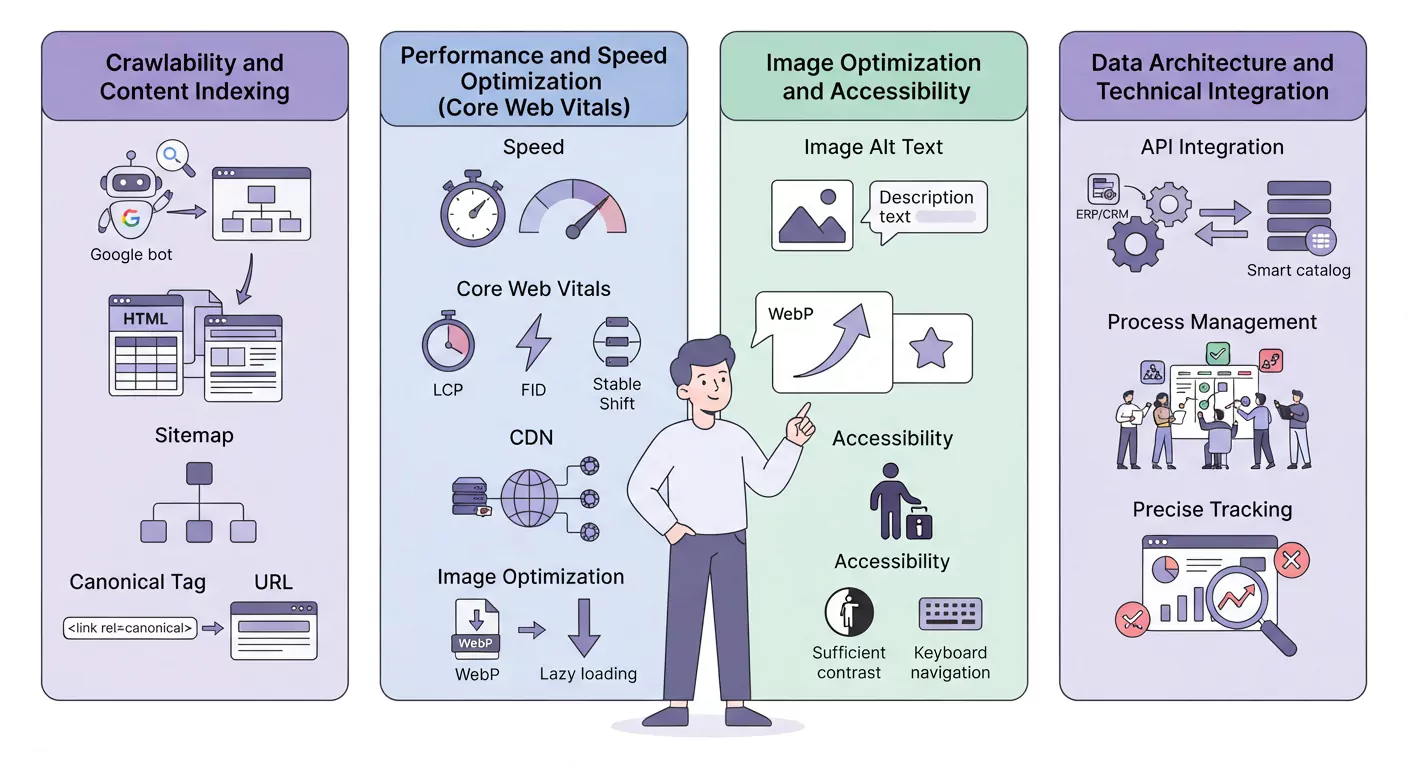
Technique: Utilize a Digital Asset Management (DAM) system for centralized image control. The catalog platform should automatically crop images for various screen sizes (Thumbnail, Mobile, Desktop) and optimize them using high-speed formats like WebP.
1.2. Efficient Video Content Strategy
Technique: Serve videos through a Content Delivery Network (CDN) and implement lazy loading (load on user click) so initial catalog load times (LCP) remain uncompromised.
1.3. Content Version Control
Technique: Maintain the capability to create multiple variants of an image or video and rollback to earlier versions when necessary to guarantee content accuracy over time.
2. Multilingual Catalog Strategy
Expanding into international markets demands a smart technical approach.
2.1. International SEO with Hreflang Tags
Technique: For each language version of the catalog, implement Hreflang tags to guide Google toward the correct language variant in search results, preventing duplicate content issues.
2.2. Translation Workflow and Quality Control
Technique: Deploy a centralized translation workflow that enables seamless collaboration between translators and Subject Matter Experts (SMEs). Use AI-driven machine translation as a preliminary draft, followed by human review.
2.3. Multilingual URL Structure
Technique: Choose a consistent URL strategy (e.g., subdirectories: [yourcatalog.com/fa/](https://yourcatalog.com/fa/) or subdomains: en.yourcatalog.com) and maintain consistency for long-term SEO health.
Read More
Video Content Strategy in Catalogs: Utilizing Video for Product Pages with Low Conversion Rates
The Importance of CDN in Digital Catalogs: How to Optimize Loading Speed by 100%?
Catalog Workflow Management for Distributed and Enterprise Teams
The Final Digital Catalog SEO Checklist: 25 Steps to Google Rank #1
Comparing Smart Catalog Platforms: Issuu, FlipHTML5, and Local Solutions
Smart Catalog Integration via API: Connecting to ERP, CRM, and E-commerce Systems
3. Data Integration for Multilingual Content
Ensuring data consistency across all platforms.
3.1. Multilingual Technical Data Management (PIM/ERP)
Technique: Technical specification data (e.g., dimensions, weight, technical codes) should ingest via API integration from ERP/PIM systems to remain uniform across all languages. Only marketing copy and extended descriptions require translation.
3.2. Multilingual Cyclical and Seasonal Management
Technique: When executing seasonal sales campaigns across different regional markets, ensure price adjustments and temporary promotional content deploy synchronously and on schedule across all languages.
• 3.3. Accessibility and Media Localization
Technique: Translate not only body copy but also video subtitles and image Alt Text into local languages to boost both search visibility and web accessibility (WCAG).
4. Impact on UX and User Behavior Analysis
How complex content presentation influences customer engagement.
4.1. Fluid Layouts
Technique: Translated text often varies in length. The catalog layout must be flexible enough so that longer descriptions in certain languages do not break page structures.
4.2. Multilingual Behavioral Analytics
Technique: Segment analytics data by language (e.g., comparing Persian users versus English users) to uncover distinct content preferences across target markets.
4.3. Post-Localization Visual QA
Technique: Conduct final Quality Assurance (QA) reviews to ensure visual assets carry appropriate cultural context and avoid regional misunderstandings.
Read More
Seasonal Content Management: Update Strategies for Catalog Promotions
WCAG and Smart Catalog Accessibility: Designing for People with Disabilities
Product Page Layout Design Techniques in Smart Catalogs: Arranging for Maximum Conversion Rates
Forecasting Market Trends Using Catalog Data: A Guide to New Product Development Strategy
User Journey Analysis in Catalogs: Identifying Customer Drop-off Points
Final Words
Successfully managing multimedia and multilingual content reflects an organization's operational maturity. Modern smart catalogs—by providing built-in media optimization infrastructures and native support for international SEO (Hreflang)—empower enterprises to expand into global markets with high speed and quality without getting bogged down by technical complexity. This focus on intelligent content management ensures your brand speaks with a unified, professional voice in every language.